Sagging runs, spilling corners and downspouts that stop short
Gutter Repair in Lincoln Park, NJ
A gutter that sags, overflows or leaks at a seam sends roof water down the wall instead of away from it. Dial (862) 972-4008 and say where the water spills, how many downspouts there are and your number out of ten.
Have this ready
Watch it rain
Watch the gutter from a dry spot while a steady rain falls. Write down where water spills over, drips off or slips behind the trough. Photograph the stains below it and the ground where each downspout lands. Count the downspouts.
Next step: call (862) 972-4008 with those notes in hand.
Repair or replace?
Clean it, re-hang it or replace the run
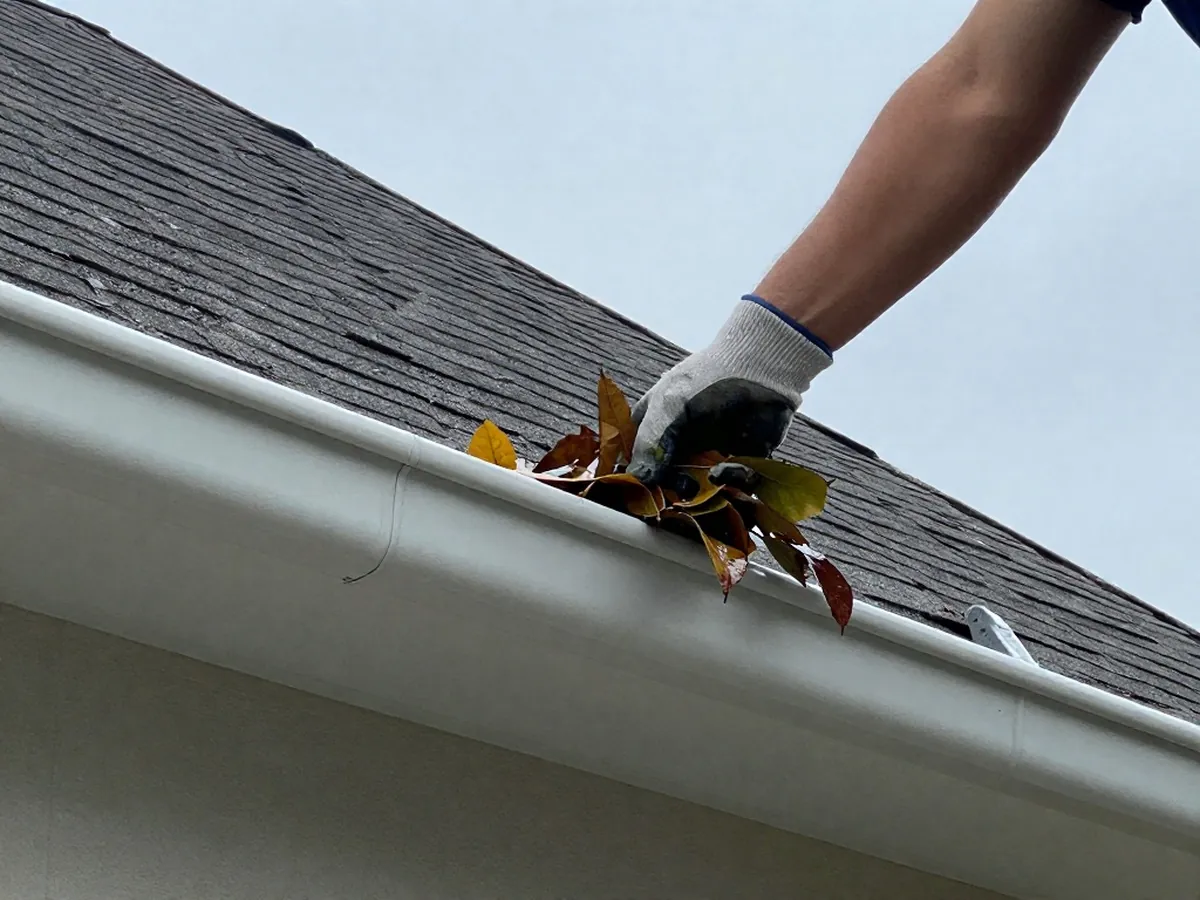
A packed trough needs cleaning. A sagging one needs new hangers or fasteners. A seam that leaks can be sealed. A run that is bent, split in several places or pulling the fascia with it is a replacement.
Ask for the quote to price those separately, so you can see whether one section or the whole side is involved.
Stop here if you see any of this
- A gutter loaded with ice or water is hanging loose above a doorway: keep people and cars away from that edge.
- The ladder would stand within 10 feet of a power line: do not climb. NIOSH sets that distance.
- Ice coats the ladder, the ground or the roof edge: do not climb. Gutter work can wait for a thaw.
- Water runs down the inside of a wall or through a light fixture: clear the room, then dial 911 once you are standing somewhere dry.
On the roof and in the attic
- Dial (862) 972-4008, give the address, which side of the house spills and your number out of ten. A short video taken from the yard in the rain shows more than words.
- The roofer reads the line of the gutter from the ground first, then from a ladder: hangers, seams, end caps and slope.
- Each downspout is traced to where it lands. EPA notes that some connect to underground pipes, and local rules may limit where water can be redirected.
- The quote separates cleaning, re-hanging, sealing a seam and replacing a run.
- Where the roof edge behind the gutter is wet or soft, that gets flagged as roof work, not gutter work.
- Ask where the water will go once the repair is done.
The parts in play
Trough, hanger, leader, splash block
The trough catches water at the roof edge. Hangers or spikes hold it to the fascia. The downspout, which the building code calls a leader, carries the water down, and a splash block or extension carries the flow clear of the wall.
EPA's advice on downspouts is to redirect them to landscaped areas that can absorb the water, and to check local rules first, since some downspouts feed underground pipes.
Around Lincoln Park
- Rutgers Cooperative Extension gives the volume: roughly 500 gallons per inch of rain from an 800-square-foot roof area. All of it leaves by the downspouts, wherever they point.
- About 68 percent of Lincoln Park lies in the 100-year floodplain, per the borough. Roof water that lands beside a foundation adds to ground that may already be wet, which is worth knowing when you look at where downspouts end.
- EPA's advice is to redirect downspouts toward landscaped areas and to check local rules first. The Lincoln Park construction office on Chapel Hill Road is the place to ask what applies here.
Why it happens
- Leaves and shingle grit packing the trough so water spills over the lip
- Hangers or fasteners pulled loose by the weight of water, snow or ice
- Seams opened by years of temperature swings
- Downspouts that end beside the foundation, or feed an underground pipe that has plugged
- Roof water arriving faster than the trough can carry it: Rutgers puts a one-inch rain on 800 square feet of roof at about 500 gallons
What you may notice
- Water pouring over the front edge of the trough in a steady rain
- A section of gutter dipping in the middle or leaving the fascia board
- Streaks or stains down the siding below a seam or corner
- Puddles or soggy ground along the foundation after rain
- A downspout that spits water at the wall or ends short of the ground
The paperwork side
Gutters in the state code
The state code puts gutters and leaders in the ordinary-maintenance list, which means no permit and no inspection for that work at a stand-alone one- or two-family house. Sending water onto a neighbor's lot or into a drain is another matter, and the town office can answer it. The offices are on the checks page.
Pages behind these notes 7
- U.S. EPA, Soak Up the Rain: Disconnect and redirect downspouts
- Rutgers Water Resources Program, Rain barrels
- Borough of Lincoln Park, Flood Information
- Borough of Lincoln Park, Construction Department
- CDC NIOSH, Ladder safety
- NJ Department of Community Affairs, Ordinary maintenance alert on roof covering (5 Mar 2018)
- Cornell LII, N.J.A.C. 5:23-2.7, Ordinary maintenance
Checked 1 Nov 2026