Wind, fallen limbs and heavy rain near the Pompton and Passaic
Storm Damage Roof Repair in Lincoln Park, NJ
Storm damage tends to leave a trail: shingles on the lawn, a bent gutter, a limb across the roof. Your move: call (862) 972-4008 once the wind or rain has passed, with photos taken from the ground and your number out of ten.
Have this ready
Photos, receipts and a dated list
Start from the ground: photograph the roof edge, the yard and each ceiling stain, with the date. Keep every receipt for temporary repairs. Make a list of what was damaged and where.
New Jersey's insurance department asks for the pictures before any damaged material is thrown away. Then dial (862) 972-4008 with the list beside you.
Repair or replace?
Temporary cover, then the real repair
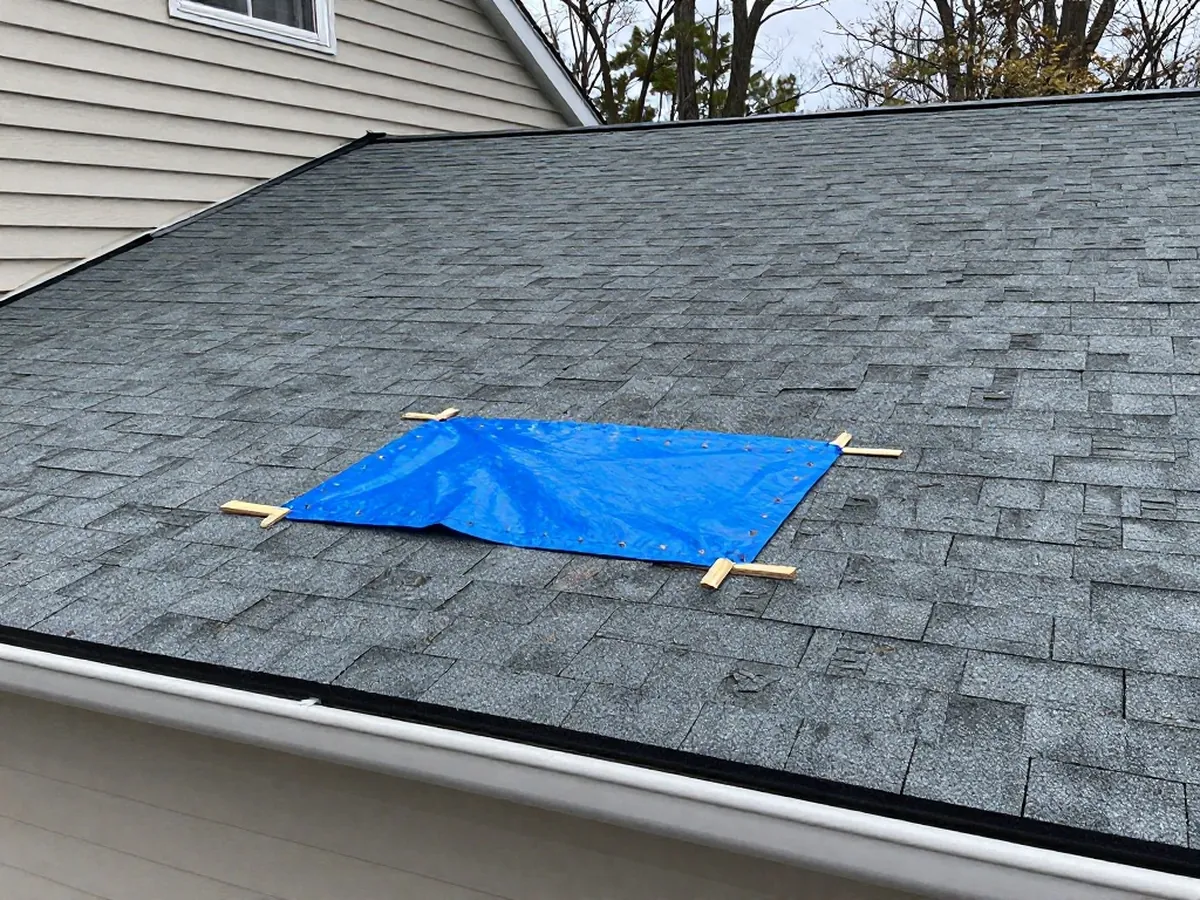
A tarp or board-up stops the next rain from coming in. It is a pause, not a repair, and the insurance department asks that the receipts be saved. After that comes the real choice: replace a few shingles and a strip of metal, or, if damage reaches across slopes, take on a larger job. Roof repair and roof replacement set out the difference.
Stop here if you see any of this
- A wire is down, sagging or caught in a tree: it may be live even when it looks dead. Stand far off, send others away and phone 911 or the electric company.
- A tree or heavy limb rests on the house and the roof creaks or the ceiling sags: get everyone out and call 911.
- Standing water reaches outlets or the electric panel: do not step in it. Leave the house and call 911.
- Shingles or gutter pieces dangle over a door or walkway: keep people away from that side until a roofer has looked.
On the roof and in the attic
- Dial (862) 972-4008 after the storm has passed. Give the address, what you saw and your number out of ten, and send photos taken from the ground.
- Before cleanup, photograph the damage and the ceiling stains with dates. New Jersey's insurance department asks for exactly that, along with saved receipts.
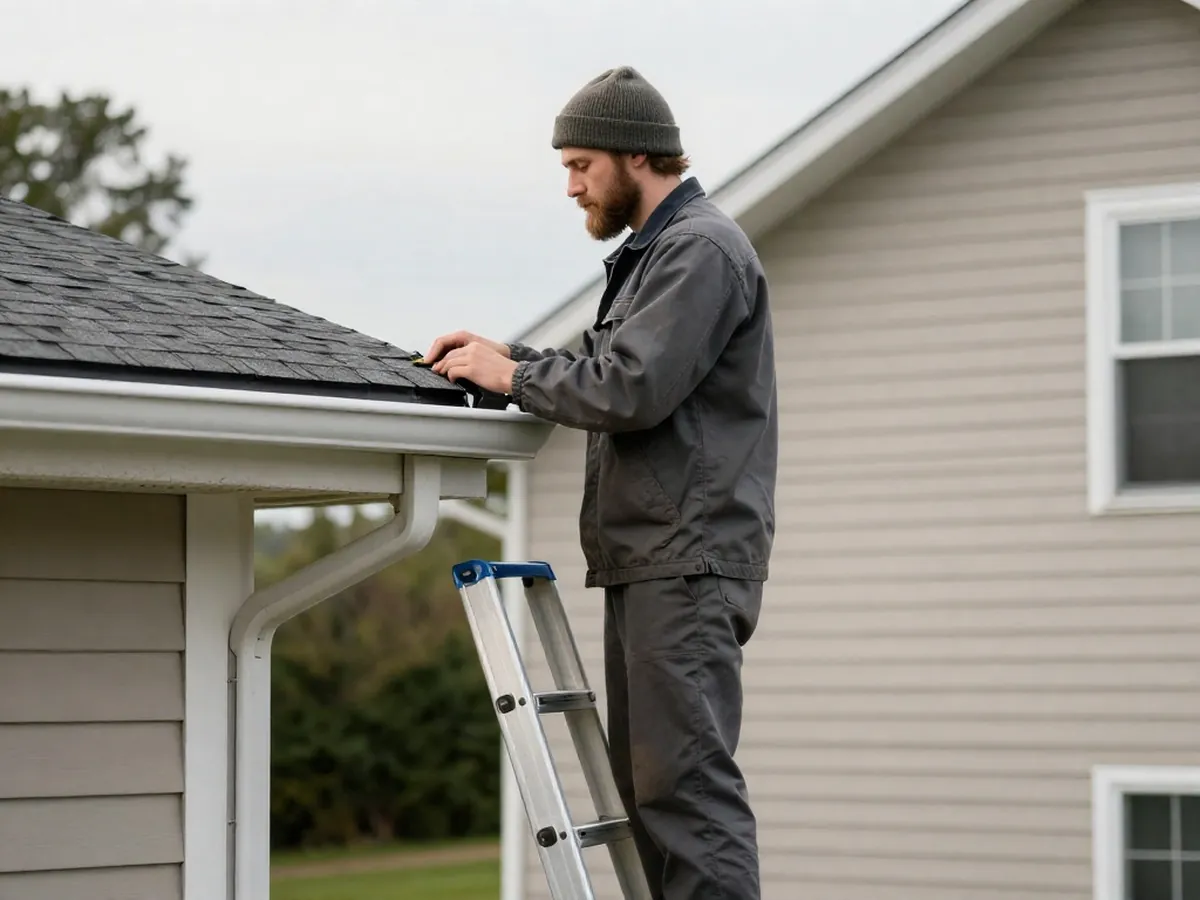
- A roofer walks the roof for lifted shingles, bent metal and punctures, then checks the attic for wet insulation and daylight.
- Temporary repairs, such as a tarp, come first when rain is due. The insurance department says to keep the receipts for them.
- Ask for a written scope that lists each repair with its location. Photos and a list give the insurer something to compare against.
- The contractor your insurer names is a suggestion; the same department says the choice stays yours.
The parts in play
Where wind and rain get in first
Wind starts at the edges. The ridge, the eaves and the rakes take the first lift, and the asphalt roofing trade group, writing after Sandy, names flashings as the most vulnerable points of a roof. Metal around chimneys and walls bends or pulls loose, and water follows the gap.
Shingles come next. One that lost its seal can flap in the next gust, and one that blew off exposes the underlayment, which is meant to be a backup, not the surface.
Around Lincoln Park
- Isaias moved through on 3 and 4 August 2020. The state weather network records countless trees down and over a million customers without power, a few of them for up to five days. Those figures cover the whole state.
- Over 1 and 2 September 2021, Ida's remnants gave Little Falls in Passaic County 7.14 inches and Newark Airport 8.44, most of it within about six hours, and the Passaic basin flooded. A roof leak and a flooded basement are different claims, and the state's insurance department notes that standard policies do not cover flood.
- Morris County's 2018 notice on downed wires says never to go near a line, even one that looks dead, and gives JCP&L's outage line as 1-888-544-4877. The borough's 2015 data sheet lists JCP&L for electric service, but the bill is the surest answer.
Why it happens
- Wind that gets under shingles at the edges and the ridge, where lift starts
- Falling limbs: Isaias in August 2020 brought down countless trees across New Jersey
- Rain heavy enough to overwhelm gutters and valleys, as Ida's six-hour downpour did in September 2021
- Flashing, which the asphalt roofing trade group names as the most vulnerable point after a storm
- Earlier wear that a storm exposed: shingles that were already loose or brittle
What you may notice
- Shingle pieces or whole tabs scattered across the yard
- A limb, or a whole tree, lying across the roof or the gutters
- A gutter bent, a downspout torn off or a roof-edge strip hanging loose
- A new ceiling stain, or wet insulation, after a heavy rain
- Flashing bent or missing around the chimney or a vent
The paperwork side
Claims paperwork and building paperwork are different
An insurance claim runs on the insurer's rules and the state insurance department's guidance. Building rules run on the construction office and the state code. For a house with no shared walls and room for one or two families, New Jersey's maintenance alert lists a storm-damaged roof covering swap among the jobs with no permit and no inspection. The details, with each town's office, are on the checks page.
Pages behind these notes 9
- NJ Department of Banking and Insurance, Guidance on filing insurance claims for storm-related damage
- Asphalt Roofing Manufacturers Association, Assessing roof damage after Superstorm Sandy (7 Nov 2012)
- FEMA, Technical Fact Sheet No. 7.3, Asphalt Shingle Roofing for High-Wind Regions
- New Jersey Weather and Climate Network, Tropical Storm Isaias recap (Aug 2020)
- New Jersey Weather and Climate Network, Remnants of Ida strike New Jersey
- Morris County, Storm caution on downed wires (4 Mar 2018)
- FirstEnergy, Jersey Central Power and Light
- Borough of Lincoln Park, Municipal Data Sheet (March 2015)
- FEMA, Returning to a flood-damaged home: ceilings and floors
Checked 1 Nov 2026