What New Jersey wants on the paper
For any home improvement over $500, New Jersey's contract rule calls for a written contract signed by every party. The rule spells out the contents: the seller (name and address), a plain statement of the job and its main materials, the price in total, and the start and finish dates. If the job is billed by the hour, the hourly rate stands in for the total. Changes to the job go in writing too.
A quote that arrives as a text message with one number on it is missing most of that. It is a starting point, and the contract is the document that counts.
The quote, one line at a time
| Line on the quote | What it pays for | Question to ask |
|---|---|---|
| Tear-off and disposal | Removing the old shingles and hauling them away | How many layers come off, and where does the old material go? |
| Deck repair | Replacing soft or stained boards or plywood found under the old roof | How is a bad board priced, and who decides? |
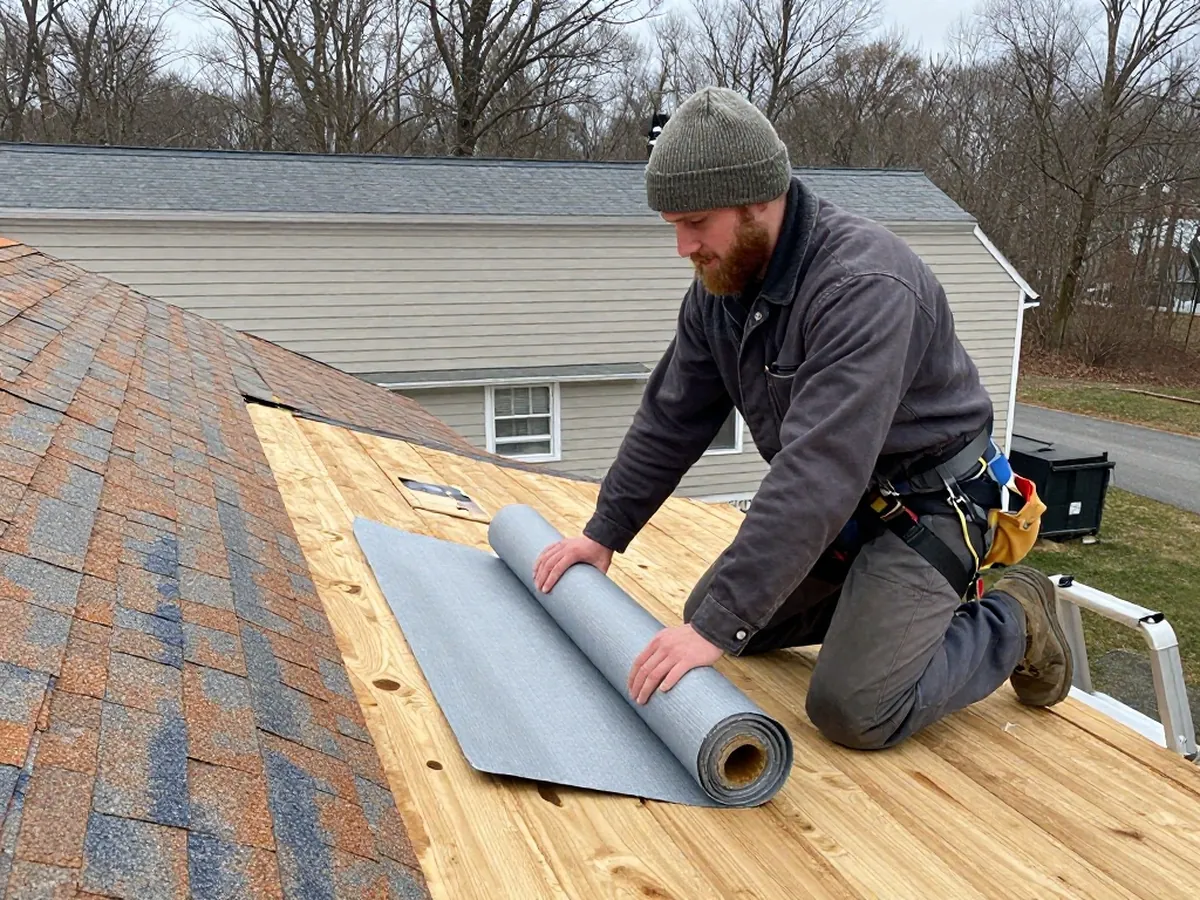
| Underlayment | The water-resistant sheet under the shingles | Which product, and how many layers? |
| Drip edge and starter strip | Metal along the eaves and the first row of shingles | Are both included and named? |
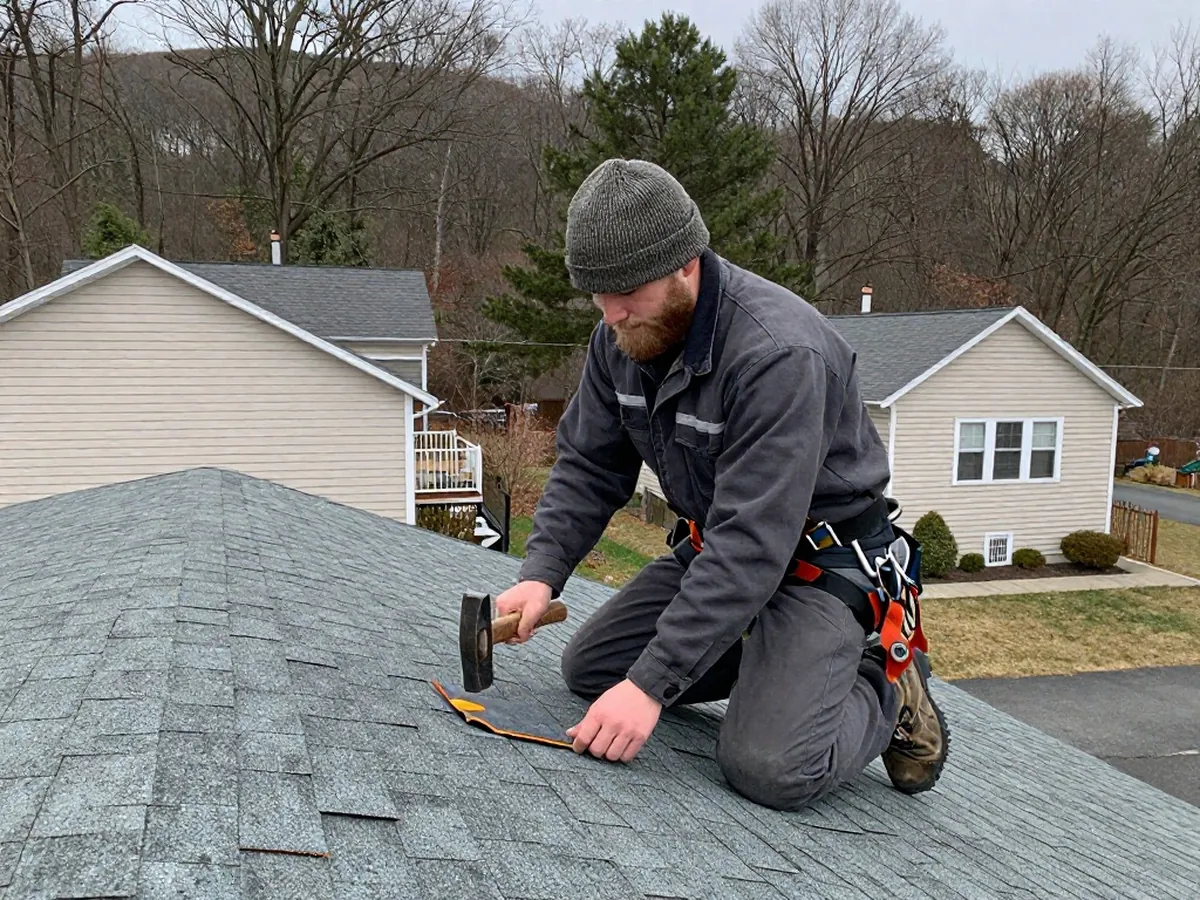
| Shingles | The visible covering | Which product line, and what holds each shingle down? |
| Flashing | Metal at chimneys, walls, vents and valleys | Which pieces are new and which are reused? |
| Ventilation | Intake and exhaust vents for the attic | Do intake and exhaust balance? |
| Cleanup | Debris and nail pickup in the yard | Who walks the yard at the end? |
| Paperwork | The contract, plus permits and inspection certificates where the job needs them | What is in writing before the first day? |
| Payment | When money changes hands | Is final payment tied to finished work? |
Materials get names, not adjectives
A line reading 'premium shingles' says little. Look for the product line, the underlayment, the drip edge and the starter strip. The Department of Energy brief describes underlayment as 30-pound felt or two layers of 15-pound, and FEMA's fact sheet for shingle roofs calls for roofing nails rather than staples, a starter strip at the eaves and a drip edge.
That fact sheet was written for regions with winds over 90 miles per hour, so the nail count it gives is a question to ask, not a New Jersey requirement. Two quotes that name different underlayment are not quotes for the same job.
The deck line nobody can price in advance
Nobody sees rotten decking until the old shingles are off. The Department of Energy brief puts the ceiling at 20 percent moisture for the wood beneath a new roof, so a damp deck gets dealt with before new layers go on. A careful quote says how a bad board will be handled: by the sheet, by the board, and who decides.
Ask for that in writing as a unit price. An open-ended extra for decking is the line that can move the total.
Flashing, the part that hides
Flashings, the asphalt roofing trade group warned in its post-Sandy advice, count among the weakest points of any roof. They also tuck under shingle edges and around chimneys, where a rushed quote can skip over them. FEMA's fact sheet names roof-to-wall flashing as a detail to watch.
The quote needs to say which flashings are replaced: chimney, walls, vents, valleys. 'Reuse existing' is an answer, and it is also a risk worth talking through.
Money, dates and the last day
The state's rule ties the money to the work. Permits, where the job needs them, are issued before work starts. Inspection certificates, where they apply, come before final payment, and no completion certificate or final payment is due until the work is finished. The same post-Sandy advice from the asphalt roofing trade group warns about contractors who ask for payment before work begins.
A sale made at your home may carry a federal right to cancel within three business days, under the Federal Trade Commission's Cooling-Off Rule, with exceptions that include emergency repairs and work you asked for. Whether it applies depends on how the sale came about.
Setting two quotes side by side
Copy each quote into the same table: the same rows, the same materials, the same paragraph on workmanship. Differences show up as blanks, and a blank is a question, not a verdict.
If the roof comes out of an insurance claim, New Jersey's insurance department says the choice of contractor stays with you, whoever your insurer recommends. To reach the department's consumer line, use 1-800-446-7467 on weekdays between 8:30 and 5.
Which line do you want to ask about first?
Pick the one with a blank beside it. Roof replacement and roof repair each list the questions that fit their job.
Your move: call (862) 972-4008 with the quote in hand, and say which line you would like explained.